Words by Tracy Fisher
As the country comes together for Remembrance and Armistice Day, it is tradition to pause and reflect, walking in the shoes of those we have never met. Yet Castle Vale’s residents do this every day with the estate’s rich military history beneath their feet.
Aviation has been at the core of Castle Vale’s history since 1909 as a privately owned aerodrome built on grassland. It wasn’t until the start of World War One in 1914 that the aerodrome was requisitioned by the government for use by the Royal Flying Corps.
Over the next decade Castle Bromwich Aerodrome (CBA) would be home to a further nine RAF Squadrons including 605 Sqn Auxiliary Air Force, which was formed as a Bomber Unit on 5 October 1926.
The squadron, now 605 Sqn Reserves, is based at RAF Cosford and recently celebrated the centenary of its formation. The Squadron Standard remains laid up at St Cuthberts Church on Castle Vale.
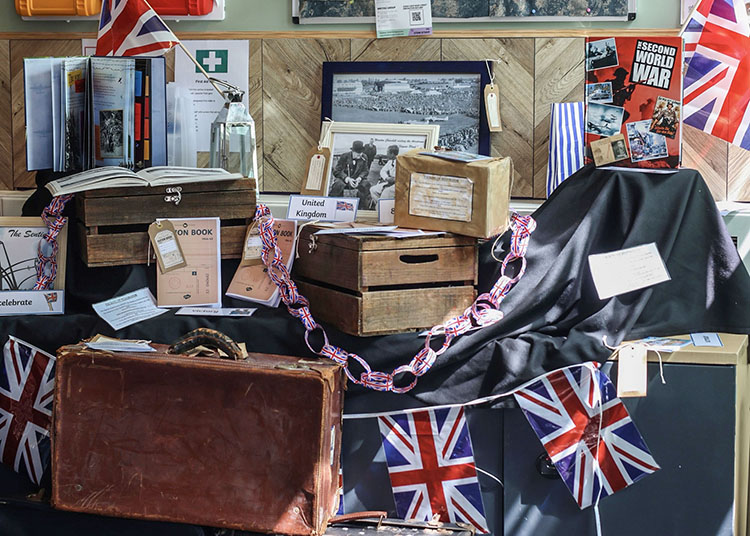
As World War Two approached, the Air Ministry earmarked land opposite CBA for a shadow aircraft factory to build Supermarine Spitfires. Construction of the site began in 1938 and Castle Bromwich Aircraft Factory (CBAF), the current home of the Jaguar Land Rover factory, was created. Production of the Spitfires eventually began mid-1940 with an estimated roll out of 320 a month.
The factory’s pivotal position during the war effort was strengthened with visits from then Prime Minister Winston Churchill and US First Lady Eleanor Roosevelt in 1942. Churchill made a point of speaking with factory workforce, including female riveters and test pilots.
Most notably, Chief Test Pilot Alex Henshaw. Each plane built had to be ready for combat missions and it was Henshaw, along with a team of 25 test pilots, to ensure their readiness.
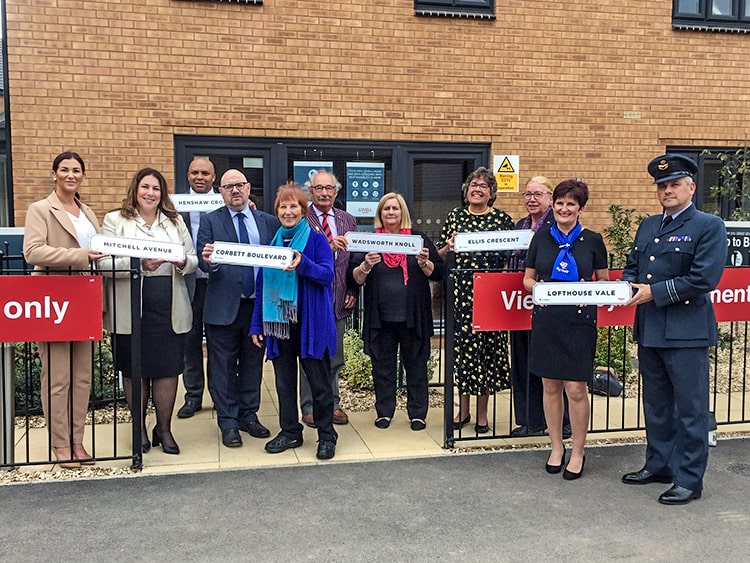
Delivery of the tested Spitfires was the responsibility of the Air Transport Auxiliary (ATA). These incredible civilian female pilots were indispensable in their role of ferrying Spitfires to other parts of the country. In 2022, a new housing development on Castle Vale, honoured the women of the ATA in recognition of their achievements with street signs bearing the names of Spitfire Pilots Mary Ellis, Elenor Wandsworth, and Joy Lofthouse.
Despite being heavily bombed during the Birmingham Blitz, by the end of the war CBAF had produced around 12000 Spitfires and 350 Avro Lancaster Bombers.
The factory ceased production in 1945, and post-war the airfield continued as a training ground until 1958. In 1964, a new era began with the development of Castle Vale housing estate.
While Castle Vale is no longer is an active aerodrome, its military connection lives on. From the imposing ‘Sentinel’ Spitfire sculpture (aka Spitfire Island) guarding over the Vale, to the wartime features that still adorn Jaguar Land Rover. The former RAF houses, military street names, the flag flying high in Centre Park, and its military veterans.
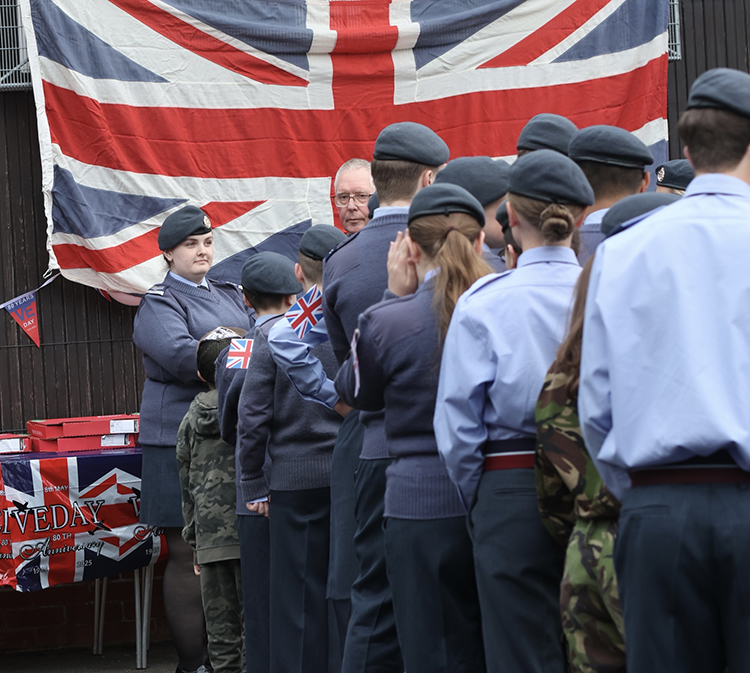
But it is the long presence of 165 Sqn Castle Bromwich Air Cadets and its air cadets who will be the next generation to continue Castle Vale’s military legacy.
If you are from a community group or an active volunteer anywhere in the Erdington constituency then we want to hear for you. Please email: community@erdingtonlocal.com

This article was first published in the Erdington Local monthly newspaper on 16 October.
To be the first to get your LOCAL NEWS delivered through your door and support independent community journalism, SUBSCRIBE LOCAL and email for more information at: subscribe@erdingtonlocal.com