
Words by Josh Neicho
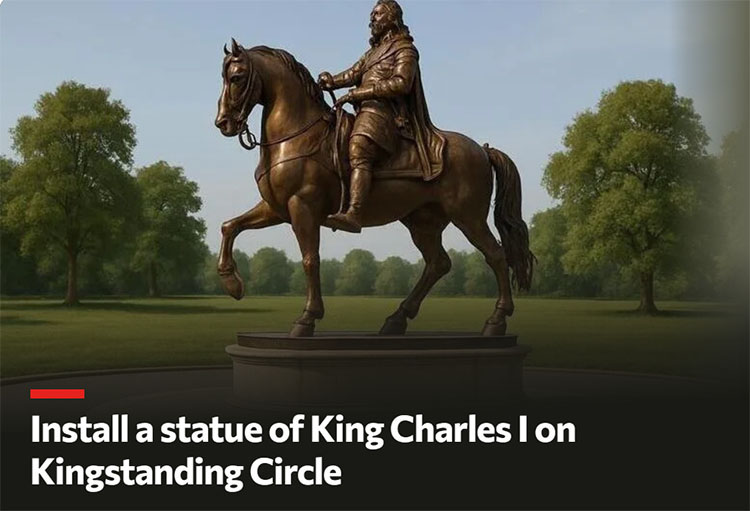
Self-professed patriotic campaigners from Kingstanding have started an online petition to see a commemorative statue of King Charles I officially erected at Kingstanding Circle, as a replacement for the unauthorised flag displays.
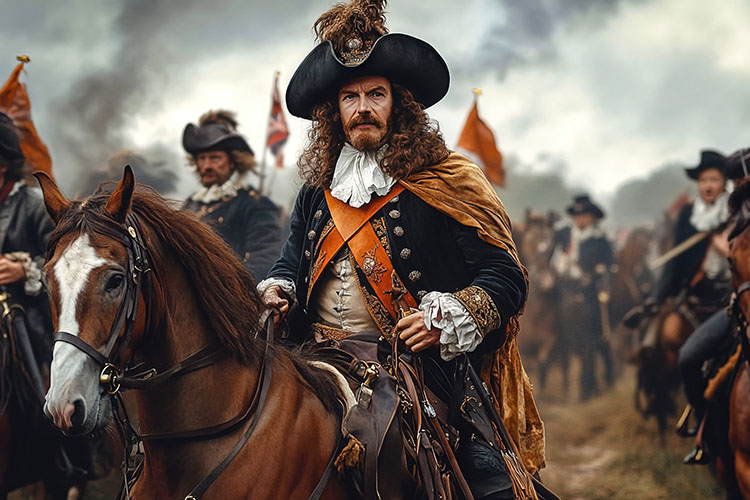
Legend has it Charles I reviewed his troops while standing on a neolithic barrow north of present-day Kingstanding Circle, in the run up to the first major clash of the Civil War, the Battle of Edgehill.
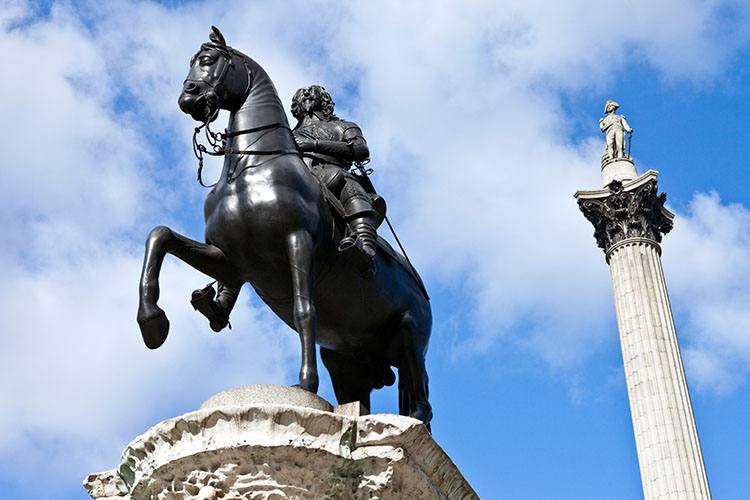
Keatley says that growing up locally, he often wondered why there was no monument to King Charles, given the name of the area, and argues Kingstanding deserves the equivalent of Brownhills’ 40 foot Tin Man or Spitfire Island in Castle Vale. His vision is of a statue similar of Charles I on horseback in scale and style to the one in the centre of London, at the top of Whitehall.
Now he is looking to amass support for the statue and has told media if approval is given to the monument the sea of St George’s Cross and Union flags on the Circle could “come down permanently”. Raise the Colours’ Chris Davis adds that “having something a lot more permanent would be a lot more fulfilling”.
For several months, the Kingstanding ‘flaggers’ have played cat and mouse with Council workers and anti-flagging activists over the display around Kingstanding Circle – with local residents debating if the campaign represents patriotism or jingoistic aggression.
Some even call the campaign racist in its intent, echoing the historic concerns over cultural division in Kingstanding – where the British National Party candidate Sharon Ebanks was nearly elected as local councillor in 2006.

But Keatley insists things have moved on in the last twenty years and believes “we should be able to celebrate our history and our culture.”
“If we aren’t doing anything to celebrate it, it’s being taken away,” he adds.
Raise the Colours Kingstanding is optimistic about the statue, after receiving support from several candidates in the recent local elections. They now hope to progress the idea with the ward’s new Reform councillors, including the Birmingham group’s newly appointed leader, Jex Parkin.
Reform UK Deputy Leader, Richard Tice, who visited during the local elections campaign, “is in full support of our movement and what we stand for”, Keatley adds, and he’s waiting to see if Tice “will help us make it happen”.
Keatley suggests funding could come from the £20 million awarded to Kingstanding under the Government’s Pride in Place scheme.

Announced by the Erdington MP Paulette Hamilton in September last year, after funds were released by the Ministry of Housing, Communities and Local Government (MHCLG), Pride in Place will see £20m come into Kingstanding over the next decade – with £2m allocated for projects annually.
Following an open application process, Birmingham Settlement boss Martin Holcombe has been appointed Chair of the Pride in Place Board that will oversee spending – with additional members being made up from local stakeholders and residents.
Hamilton says she is proud to have secured the funding and decisions on spending must be community-led. “This funding should reflect the priorities of local residents, whether that is investing in youth services, safe and welcoming spaces for older people, improving parks and public spaces, or indeed proposals such as a statue of King Charles I,” she confirmed.

But historians warn that claims about Charles I’s presence at Kingstanding should be treated with due scepticism.
Professor Andrew Hopper, a Civil War specialist who grew up in Solihull, says he knew the story years ago, “but only from ‘tradition’ and oral sources”. Professor Hopper adds that enthusiasm for a Charles I statue is ironic, given Birmingham’s noted Parliamentarian sympathies in the Civil War and the sack of the city by Prince Rupert – an incident recalled by several Erdington Local readers.
After reading about Keatley’s petition on Erdington Local’s social media, James Wells from Erdington Lunar Society posted: “Let’s commemorate someone who attempted to take our democratic rights away, caused a civil war that divided the country and whose son viciously attacked Birmingham who supported the parliamentary side. I don’t think so.”
Doyen of Birmingham history Carl Chinn says a more prosaic explanation is that the name comes from a ‘standing’ – a hunter’s station – which Chinn thinks is plausible given the area’s proximity to Sutton, a royal chase.
Meanwhile researcher Ronald E. Crook once documented the word ‘king’ was common in the names of local fields before the Civil War and that there are stories linked to the Kingstanding barrow about a medieval Danish king’s exploits too.
To see the online petition visit www.change.org/p/install-a-statue-of-king-charles-i-on-kingstanding-circle
